
My Bible study is in our eighth week of studying the first epistle of the Apostle Peter, with only one more week to go. As I tried to settle into this week’s text, chapter four, I kept having trouble focusing on the text as a whole, which is how I usually start each week of studying. My mind kept getting snagged on a single verse. In verse 16 Peter writes, “Yet if anyone suffers as a Christian, let him not be ashamed, but let him glorify God in that name.” Maybe I wouldn’t have caught it if my pastor hadn’t just preached on Acts 11; in Acts 11:26 Luke writes, “And in Antioch the disciples were first called Christians.” These are two of the only three occurrences of the word “Christian” in the entire Bible, the third being in Acts 26:28.
Christians – it’s a term we today take for granted. I can’t walk into even Ace Hardware without seeing trinkets painted with the word (although I do live in the South). What fascinates me so is that Luke, and especially Peter, have captured one of the greatest tipping points in history: when members of a small but growing religion embraced an insult as a crown.

For centuries, the word “queer” meant odd or strange or “not quite right.” In the late 19th century, the word began to be applied to those not following the Judeo-Christian definition of normal sexual relations. It was a slur, and homosexual individuals took it as such. It wasn’t until late in the last century that the gay community began to claim this epithet as their own. Sometime during the last 20 years, “queer” became an accepted, even celebrated term for those holding non-traditional sexual values. Though this is a charged example, it illustrates exactly what happened in the Roman Empire during the late first century.
At the time Peter wrote his first letter to the new believers of modern-day Turkey, followers of Jesus – of The Way, as they called their faith – were being insulted and smeared, mocked as “little Christs,” Christianoi – Christians. Non-believers were maligning the faithful for their love of Christ, using the name of Christ to do so. But Peter had heard Jesus say in person, “Blessed are you when others revile you and persecute you and utter all kinds of evil against you falsely on my account. Rejoice and be glad, for your reward is great in heaven….” (Matthew 5:11-12) Claim it, Peter says, Take the insult and wear it proudly – for “if you are insulted for the name of Christ, you are blessed, because the Spirit of glory and of God rests upon you.” (1 Peter 4:14)

Right now, the most vocal and visible defenders of Christianity are American political figures. As to be expected in a secular culture, the news media, along with many scientists and celebrities, tear them down viciously, whether on TV or the internet. But is Peter’s letter an encouragement to them? Do they bear the name “Christian” as a brand or do they wield it as a sword? It may sound harsh, but Peter, of all people, would be appalled at those leading our country in the name of Christ. Peter, Peter, the rock on which Jesus is still building his Church. It was Peter who rebuked Jesus for saying he would suffer at the hands of sinful men. It was Peter who wielded a literal sword against the mob that came to arrest his Teacher. It was Peter who wept bitterly after denying his Lord to save his own skin. Peter, loved by Him who suffered most. Peter, lover of Christ’s precious flock. That Peter would be appalled.

I study the Bible in technicolor – meaning I use an indecent number of highlighters and colored pencils. Because of this, a quick glance at the copy of 1 Peter on my desk shows me just how wrong people have it when they use the name of Jesus to gain power or a better life. During my study of Peter’s first epistle, I have used a fluorescent orange highlighter to mark every occurrence of the word “suffer” (including suffering, suffered, etcetera). I’m wondering whether it was the wrong choice of color, because every page of the letter is now overwhelmed by orange. The apostle who once fought with weapon and words to circumvent suffering was transformed by Jesus’ resurrection and his own redemption. As he neared the end of his earthly life, he offered unusual comfort to weary members of the Church, saying, “For to [suffering] you have been called, because Christ also suffered for you, leaving an example, so that you might follow in his steps.” (1 Peter 2:21)
In her study on the book of Matthew, Jen Wilkin calls the kingdom of God the “upside-down kingdom.” To the disappointment of his fellow Jews, Jesus never tried to overthrow the Roman Emperor, nor did he gain power by wearing I Love Rome T-shirts. “Give to Caesar what is Caesar’s” is what he said. Peter too exhorts his readers to “honor the emperor,” but he also preached the Gospel despite those in power commanding him to cease, even to the point of imprisonment. Even to the point of execution. Because, though he tells us to honor the government and its laws, in the same breath Peter tells us to “Fear God.” (1 Peter 2:17b)

It may be obvious to you that first century Rome was not a Christian nation. What may be less so is that there has never been a Christian nation. But what about America? Our money says, “In God We Trust,” after all, and weren’t the founding fathers Christian? Regardless of whether they were (and regardless of what November’s election produces), America is not a Christian nation, and I urge you to be wary of anyone telling you otherwise. But what about our leaders? Like you said, they’re being maligned for their religion 24 hours a day by the media! I agree – the term evangelical Christian is being dragged through the mud daily.

I asked above whether America’s Christian leaders bear the name Christian as a stigma or as a weapon. Another, maybe easier, question comes to mind: Does the end justify the means? These exact words occur nowhere in the Christian Bible, but word searches miss a lot. I only need glance down at my desk to find an answer in – you guessed it – 1 Peter. Chapter one, verses 13 and 15 say, “Therefore, preparing your minds for action, and being sober-minded, set your hope fully on the grace that will be brought to you at the revelation of Jesus Christ… but as he who called you is holy, you also be holy in all your conduct.”
The name “Christian” may have become a slur again, but why it has matters. Yes, one reason non-believers curse Christians hasn’t changed since the Apostle John wrote his Gospel: they love the darkness more than the light. There is another reason, though – one I am deeply ashamed I have been guilty of before. Years ago, I, while attending church on the weekends, lived in what Peter would call a “flood of debauchery.” (1 Peter 4:4) I was a hypocrite and didn’t even notice. My friends, look around you; if you dare, look inside yourself. Do not cause the world to mock you because you use the power of Jesus’ name to gain comfort or power for yourself. The end never justifies the means. Indeed, the suffering of the Christ is the only means to the only good end.
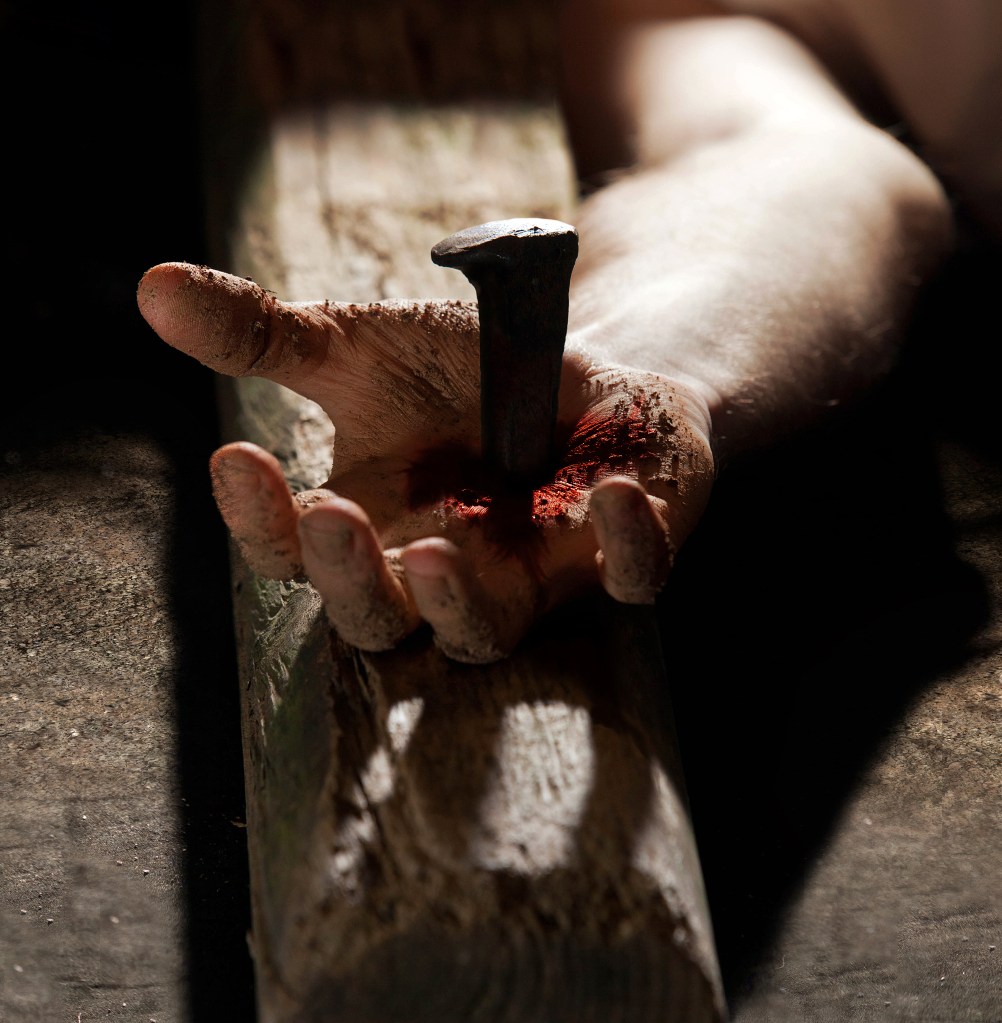
Our Father God gifted all who believe in his Son Jesus Christ the title Christian, along with a crown of glory and an eternity of joyful rest. All he asks of us – not to earn this glory, but to live out of it – is to love his Son, and loving his Son means suffering as foreigners in this world. Thanks be to God for Jesus’ disciple Peter, a reminder that even he who was given the keys of heaven was human. Oracles of God did not spring from his mouth the moment he met Jesus. Quite the opposite, really, and I hope that this is as much of an encouragement to you as it is to me.
I have precious little experience suffering for my beliefs, but God promises it will come. So, suffer with me for doing good, as Christ suffered, and let us never draw a sword to strike the ear of our persecutors. To use Jesus’ words, turn the other cheek. Let’s reclaim the title Christian as what it should be: a badge of honor before God, Christ, and the Church, but a rock of offense to the world.


Thank you so much for these words.
LikeLike