
We are all trying to get back to Eden, whether we know it or not. All the strife and striving around us, all the fear and dread of losing rank or security – all of it is due to our desire to be loved and safe, with meaningful work and freedom from pain and despair. Think about how often people truly find this state of “Zen.” The have-nots long for the safety and security that money can bring. The “haves” fear loss of what money has bought. Both these groups, along with everyone in between, have a vague idea of, “it must get better than this.”

Christians, of course, know that there is something so much better that it cannot be fully experienced on earth. We have confidence what awaits will be even better than Eden, and that we are already its citizens. But since that citizenship is in heaven, we must sojourn on earth in a kingdom not our own. In doing this, we join the ranks of Abraham, Isaac, and Jacob, who sojourned in a land not yet their own, with absolute faith that God would deliver it to their sons and daughters at the perfect time.

The books of Exodus, Leviticus, and Deuteronomy are filled with God’s commands concerning sojourners living in the Promised Land. Some might be surprising; Israelites were to treat the sojourners within it with the same care God showed to them when they sojourned in Egypt. Sojourners were to be under the same law as Israel – never to be oppressed or treated as “less” than a descendant of Jacob. Israel could not exclude sojourners from worshiping Yahweh (provided the males were circumcised). Different permutations of God’s words (here from Deuteronomy 27:19a) are scattered throughout the Old Testament: “‘Cursed be anyone who perverts the justice due to the sojourner, the fatherless, and the widow.’”

I only learned recently how closely and repetitively sojourners are linked to widows and orphans in the Old Testament. They were the powerless, the landless, and the ones far from family. Of course, the New Testament, too, describes our Lord caring for the poor and lonely, the widow and the fatherless. The word “sojourner” (and “sojourn,” “sojourned,” etc.) occurs 127 times in the ESV Bible. Just two of those occurrences are in the New Testament, one of which is from Stephen’s mouth as he summarizes Israel’s history. I do not think this means the New Testament has nothing to say about sojourners.
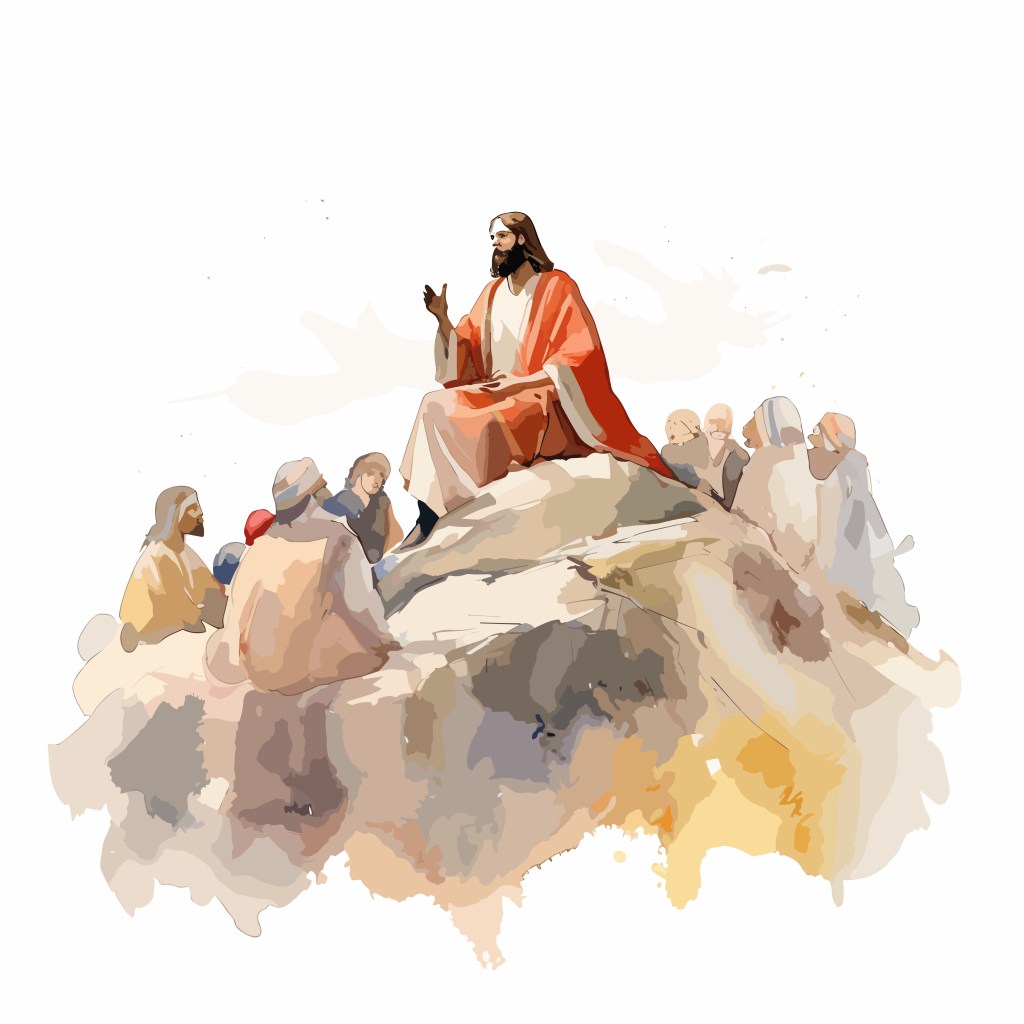
God’s law stood unchallenged until Jesus came to fulfill it. Jesus, a sojourner himself, told us to care for the downtrodden – the widows and the orphans. He, along with his Jewish listeners, knew perfectly well that, in the Hebrew Scriptures, “widows and orphans” were regularly grouped with the sojourner and the alien. Besides that, Jesus gave us the Golden Rule. I’ll argue that a little twist on this Rule reflects a further dimension of the truth he taught. As recorded by Matthew, Jesus tells us, “So whatever you wish that others would do to you, do also to them….” But permeating the rest of his teaching is the far higher standard: do for others all God has done for you. How much harder is this to achieve?!
Yesterday, I was thirty minutes into an elliptical workout when God showed me a new kernel of truth that fleshed out the lesson plans I had on my mind. I didn’t want to forget, so I dictated the idea into my phone – imagine a slightly disoriented person with a heart rate of 145 breathlessly trying to dictate, all while holding a phone on a moving machine! Pre-workout, I had been thinking about whether all people are sojourners or just believers. Or maybe believers were double-sojourners? I’d reached a bit of a block. Then God reminded me of my erroneous definition of “sojourn” before being enlightened by Jen Wilkin’s Bible study on Genesis; I had equated sojourning with wandering. It wasn’t until I began looking at Genesis in-depth that I realized to sojourn was to remain in one place, just not a place you’re from.

I finally understood that we, as believers, are the true sojourners. We live in one place, but our citizenship is in another. But if all of humanity’s original citizenship was in the Garden, doesn’t that mean all people are sojourners on God’s earth? As I sweated it out on the elliptical, God took me back not to Abraham, the quintessential sojourner, but to Cain. Cain sinned and refused to repent, to God’s face. What was his punishment? You would think it’d be death. But no, Cain’s punishment for taking his brother’s life was to wander the earth and never truly belong to any land.

Though everyone is trying to return to Eden in some way, not all of us are sojourners on earth, looking to our true home. Humanity is doomed to wander, and that aimlessness eats away at our hearts like acid. Regarding the first murder, God, ever true to his character, bestowed not just justice on Cain, but grace as well. Cain, vulnerable and rootless, deserved to be killed by whoever found him. He begged God that this not be the case, without repenting, and then Yahweh marked him as one protected by God.

So, here’s the challenge to believers: do you live your life as a wanderer or a sojourner? No matter your answer, we are all sojourners who once wandered. I have no doubt that God’s commandments at Mt. Sinai and Jesus’ fulfillment of them in his life, death, and resurrection still stand. We, citizens of New Eden, are to have hearts for all wanderers, because we were once wanderers ourselves. But that’s not the end of the story, because there are physical wanderers as well as spiritual ones. And the Old Testament has plenty to say about both.

Search the world and you will find the double-wanderers: the immigrants, the refugees, the widows, the orphans. Our desperate state before we were saved is the spiritual state of anyone who doesn’t believe in the Lord Jesus, but many people in this world live in that same desperate state physically, as well. Jesus told his disciples to love their enemies, for even the Gentiles care for their friends. The Father said before that, “You shall treat the stranger who sojourns with you as the native among you, and you shall love him as yourself, for you were strangers in the land of Egypt: I am the Yahweh your God.’” (Leviticus 19:34)
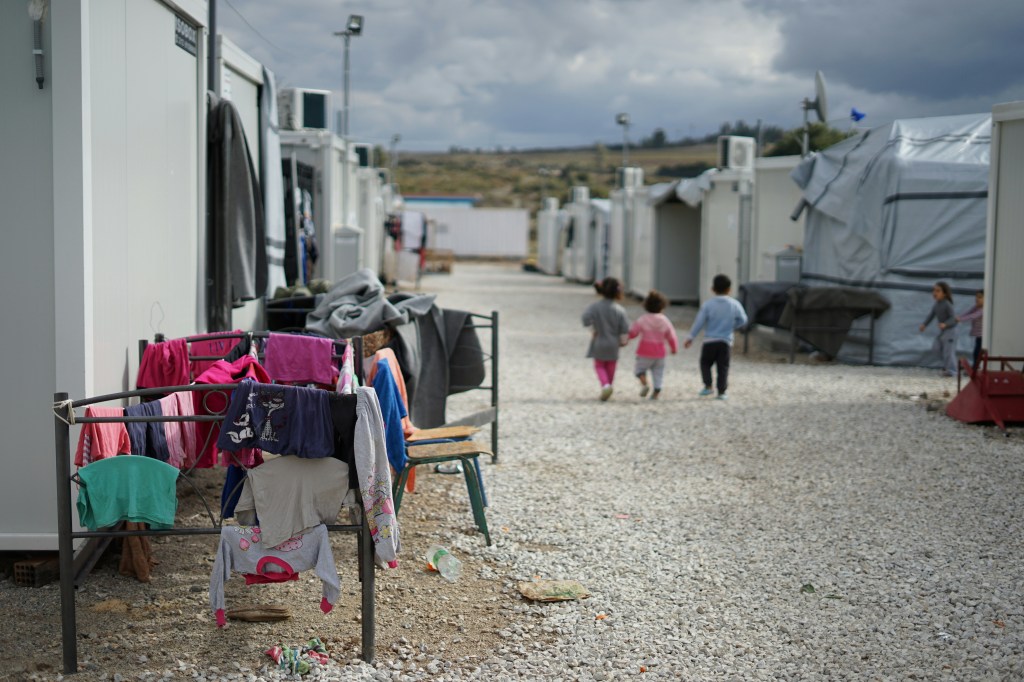
It is hard for me to hear discussion about immigration suppressed among Christians because “that’s a political issue.” There are countless ways that a country or state can deal with immigrants and refugees, and these are what play out in the political field. But as Christians, our first allegiance is not to country, but to God. I do not believe any of us should simply throw up our hands and turn our backs on contentious political issues, but one’s political “views” should first and always be informed by the words of God as recorded in the Bible. It is a fatal mistake to allow your political views to affect the way you understand the Bible. Read, study, and let God’s words guide you to vote for what is consistent with the God of the Bible. And never become militant or proud, for you are neither omniscient nor omnipresent.

Really, my advice is simple, and it matches God’s priorities throughout history: see the people. See your grandmother on that boat capsizing on the Mediterranean. See your mother when you see a woman sneaking her children across the border. Imagine your children being torn from you at the Mexican-American border. There is no Christian political party. We, like our Savior Jesus, are to feed, care for, and rescue people – individual people, all made in the image of the only Righteous One.

We were once wanderers, “strangers to the covenants of promise, having no hope and without God in the world.” (Ephesians 2:12) Before we repented, before we even sought God, he reached out his mighty arm to us: the poor and lowly, the wretched and defeated. While we were still wanderers, he bought our citizenship and booked our flight home. And during our brief sojourn on earth, he has called us to be his hands and feet to every lonely wanderer of this world.
Then the King will say to those on his right, ‘Come, you who are blessed by my Father, inherit the kingdom prepared for you from the foundation of the world. For I was hungry and you gave me food, I was thirsty and you gave me drink, I was a stranger and you welcomed me, I was naked and you clothed me, I was sick and you visited me, I was in prison and you came to me.’
Then the righteous will answer him, saying, ‘Lord, when did we see you hungry and feed you, or thirsty and give you drink? And when did we see you a stranger and welcome you, or naked and clothe you? And when did we see you sick or in prison and visit you?’
And the King will answer them,
‘Truly, I say to you, as you did it to one of the least of these my brothers, you did it to me.’
Matthew 25:34-40
 Before the Fire
Thanks, Rebecca. Brings both images and truth to mind. I appreciate your insights.
LikeLike
Thank you 😊. Praying for you and R.
LikeLike