Vulnerability. Just typing the word makes me tense up. Unless you’re talking about anger or happiness, I prefer my emotions to remain inside of me, where they belong. I have no idea when I started locking away most of my distressing emotions and I’m not sure why, either. In fact, I was clueless that I was putting walls around various sources of pain and sadness in my life until my first episode of bipolar depression during my senior year of college. All of a sudden, I found myself crying at the drop of a hat – even in front of other people! I hadn’t noticed until then that I had not cried in front of anyone except my mother since I was a young child. But what’s wrong with that? I got straight A’s, had friends, was athletic, and, other than that bout of depression, was pretty stable, emotionally speaking. Seventeen years later, I’m beginning to see that that stability came at a cost.
My depression resolved, although it took five years to identify it as such, and I finished college with soaring spirits, new friends, and admission into a prestigious medical school. I successfully put my vulnerabilities back under lock and key and moved on with life. It wasn’t long after that, though, when the pain started, along with bouts of fatigue and swings between insomnia and hypersomnia (too much sleep).
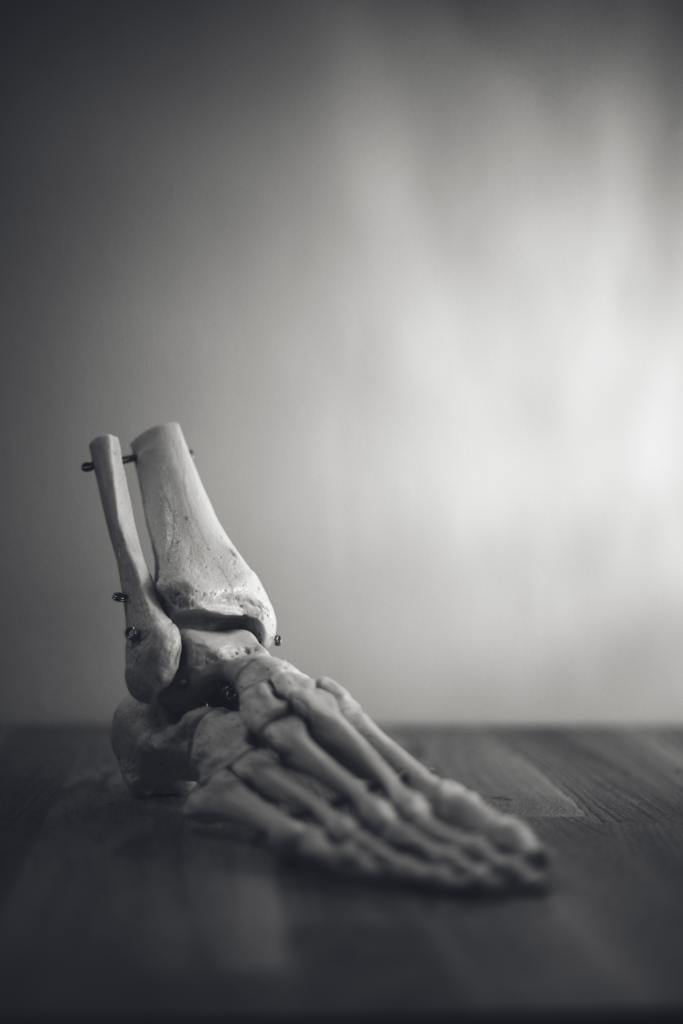
The pain wasn’t mysterious – I stepped off of a curb wrong while running and broke off a chip of bone in my left foot. My podiatrist suggested I try conservative treatment first and put me in a walking boot for six weeks. I asked if I could do the elliptical in it. He said yes, so I took that to mean that I could rock climb in it as well. Doubtless, it is not surprising that I failed conservative treatment and required surgery. What my young, reckless (stupid) self didn’t anticipate was that surgery would fail and I’d be left with constant pain at the injury site. I was stubborn (again, stupid) enough to run through the pain, but it meant the amount of walking I could do daily was limited. When my clinical rotations started in my third year of school, I had no choice but to give up running. It was like giving up a piece of myself and the pain was still bad enough to distract me from school by the end of the day.
The fatigue and sleep problems I was having were less clear-cut for my medically-educated mind to grasp. The only concrete thing I remember about these symptoms is that I spent a lot more time than my friends in the student health center. Eventually, they sent me to the psychiatrist, which I found mortifying. All I remember about that is the doctor was a pleasant woman, I went a couple times, and she prescribed an antidepressant. I do remember taking it for a few months and then stopping, but I don’t remember why I decided I didn’t need it. At no point in all of that did my feelings come up.

As I neared the end of medical school, my behavior become more and more erratic. Up until that point, no matter what was going on internally, I had always been a model student and a responsible person in general. Fairly quickly, my priorities shifted from performance in my rotations and preparation for residency interviews to personal pleasures and ill-considered enterprises. I failed the first test of my entire life (actually, I’d never gotten below a B+). Despite this, I still got into residency and ended up caravanning to New York City with three classmates. During the trip I was outgoing, gleeful, and talkative, when I’m normally the definition of an introvert. Everything was wonderful in my life right then. My foot still hurt – it just didn’t bother me. Then July 1 came.
In case you don’t know, all residencies across the country begin on July 1. If you can, avoid going to the hospital in July. Seriously. Anyway, maybe it was the physical stress, maybe the mental. Maybe it was the fact that I was working 13 hour shifts in the ER six days a week, alternating at least twice a week between days and nights. My foot pain became crippling, but it was overshadowed by a newly blossomed back pain. I remember taking frequent “bathroom breaks” just so I could stretch in the hallway. Cracks in my self-imposed emotional control must have been showing at that point, but I held it together for two months. As you might expect, the dam eventually broke.
I have almost no memory of the night my life shattered into thousands of shards of pain. I am told I called a friend and, through tears, whispered that I couldn’t stop crying and didn’t know what to do. She took me to the ER – my ER – and I was given sedatives and admitted to a neighboring hospital’s psychiatric ward. To make a long story slightly shorter, I was misdiagnosed as having major depression, got far worse with treatment, and ended up home with my parents in California, unable to care for myself. After three years, I was properly diagnosed as having bipolar disorder and, after a few years of appropriate treatment, began living independently and working part-time in retail. My pain was just as much a limitation as my mental illness when it came to working, despite being on strong narcotic pain medication.
It was during these first six years after leaving residency that I was given a miracle in the form of a new podiatrist. I was still having enough pain that I was unable to work an eight-hour shift, which limited how many days I could be assigned. I was also unable to even walk for exercise, much less run. Because of a medication side-effect, I had gained 90 pounds and my self-esteem was rock-bottom. Dr. Todd (in an odd twist, educated by the podiatrist who did my first surgery) diagnosed me as having a nonexistent bony arch (my words) and reconstructed my foot. After a second surgery to remove the metal hardware, I had no pain. Zero. During my recovery, I had been working hard to lose weight and once I was able, I began running again. Truly, a miracle. The problem was, my back just got worse.
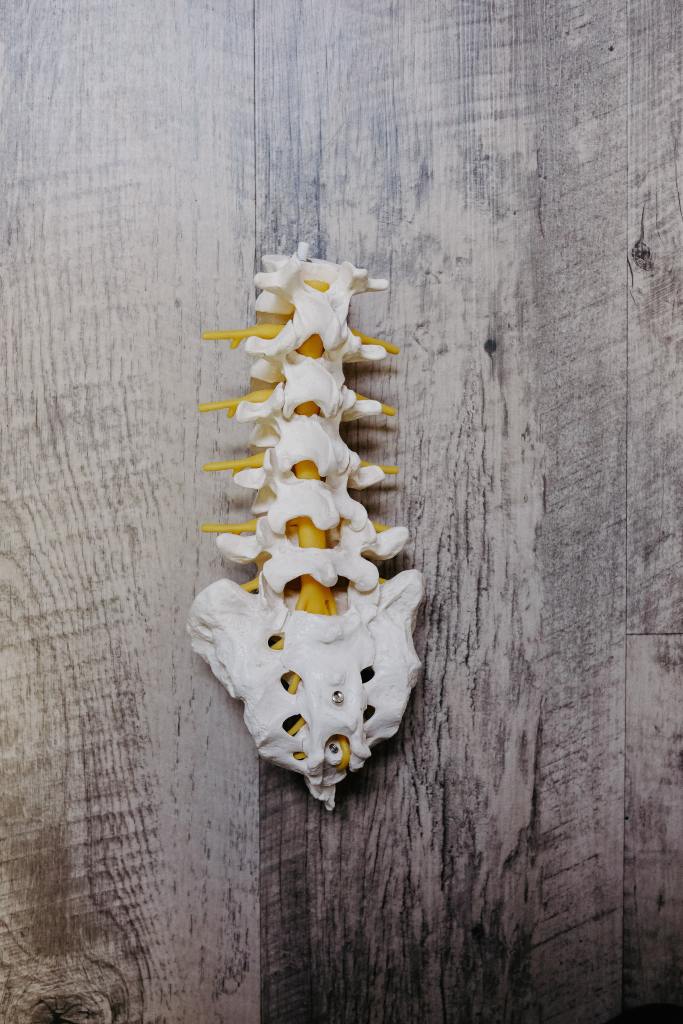
Five years ago, I moved with my parents to Tennessee. Culture shock aside, it has been wonderful living in my own house for the first time as well as not having to deal with Bay Area traffic. Overall, my mental health has been stable since I’ve been here. It’s certainly taken time to make friends, as I keep my feelings and true personality wrapped close. My physical health, on the other hand, has been a little out of control – bad enough that when I walked up to the pharmacy counter a few months ago in a wrist brace, the pharmacist said, “Oh no, what now?” I’ve had four orthopedic surgeries in the five years I’ve been here, and I still take three medications for pain at this point. It is only in the past month that I’ve started to wonder if there is a connection between those locked-down emotions and my ever-present, migrating pain.
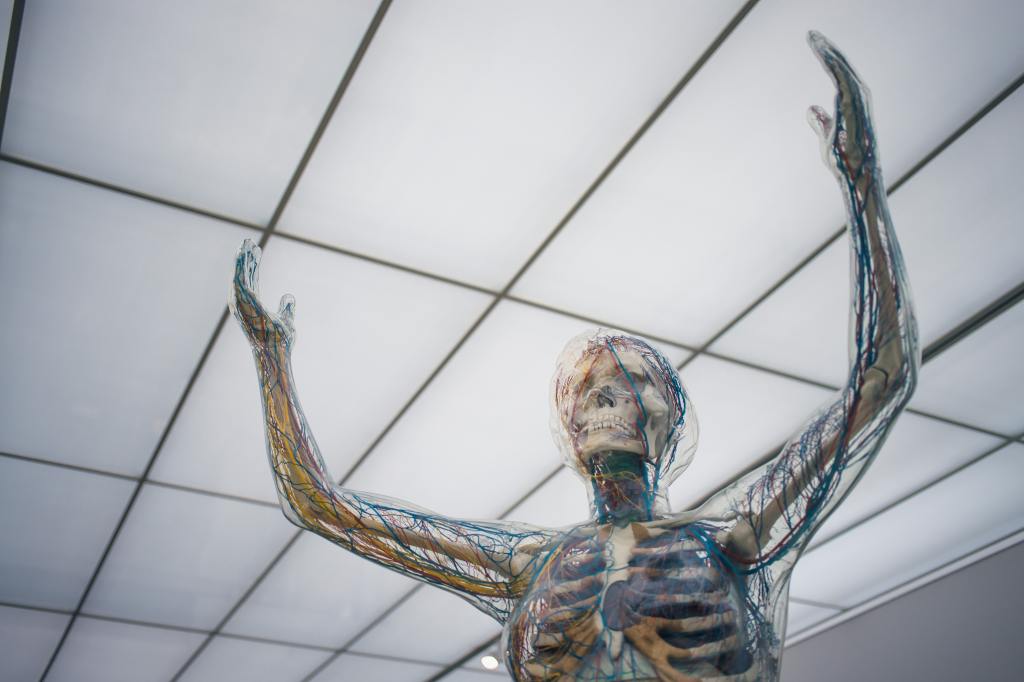
Psychosomatic. I don’t know when I learned the word – maybe in college, but definitely by medical school. Psychosomatic… it always trailed a subtle wake of contempt in my mind. I don’t remember if I admitted it to myself at the time, but, before my relationship with the word became quite so intimate, it meant, quite simply, weakness. Merriam-Webster defines the word as concerned with bodily symptoms caused by mental or emotional disturbance. To me, as to many Western-educated physicians, that means symptoms that are not real. Many of my doctors over the last several years have edged around this charged word. Psychosomatic. I, having another invisible illness already, am always primed to react aggressively. My pain, I thought to myself, is most certainly real. I am not weak, and I needed someone to treat me so I could get better.
I saw a different sort of doctor a couple weeks ago. He was the first person to give me a definition of psychosomatic that didn’t make my jaw clench and my eyes narrow. Psychosomatic, he said, was indeed the mind and emotions causing physical symptoms, but, he explained, these symptoms were real. His example was blushing. The triggers that lead to blushing are purely emotional: embarrassment, attraction, rage (I blush when I get mad – I don’t know if anyone else does); the reaction to these triggers, though, is physical, even visible. Suppressed emotions and extreme stress, he says, can do the same thing to certain nerves throughout your body, causing pain and fatigue, among other things.
My first thought as I drove home from this appointment was, yeah, ok, I certainly seem to fit the profile, but I don’t have suppressed emotions or stress. And that’s partly true. My life right now is enviably idyllic. I’m doing exactly what I want to be doing, I have the time to do it, and I get to wear pajamas all day long if I want to. Seriously, though, I am as happy as I can remember being in ages. The biggest part of this settled contentment is that, in the last year and a half, the Christian faith I’ve had for several years has matured into something that has both roots and leaves. Through this, I’ve been able to forgive those who have caused the greatest hurts in my life, including my absent father and the doctor who for three years flung dangerous medicines at me without admitting she was out of her league. My road rage is gone and I no longer hold any resentment about the pain I still have. So, how could this “stress illness” stuff have anything to do with me? It only took a couple days to find a hint of the answer.
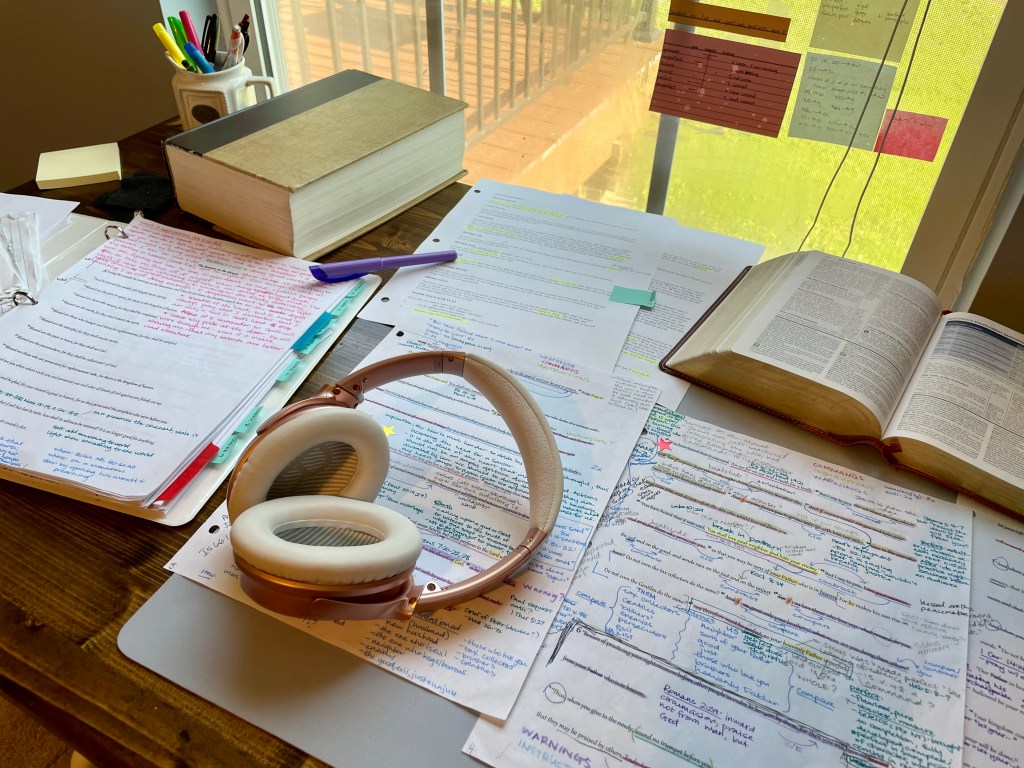
I’ve been co-leading a Bible study with my mom since the beginning of the pandemic. Studying the Bible and learning about my faith is my favorite part of the day. I always loved school and Bible study brings together that weird love with my love of God. Oddly, though, the deeply moving insights I gain doing this do not bring any emotions to the surface. I don’t cry or laugh or anything like that. It’s more academic. Now music, that’s different. There is certain music, both contemporary and classical, that I cannot hear without crying. Me. Crying. There are certain verses in the Bible that do the same thing to me. Several months ago, I wrote a blog post called Doubts in the Disconnect describing my frustration and worry surrounding the fact that I experience my religion in two very separate ways. I’m starting to wonder now if my mind is simply edging toward wholeness, only it’s looking a little messy along the way.
Now that I’ve seen this new doctor and read a book on the subject as well, I’m wondering if joining my soul into one piece and allowing my emotions back into my mind might have an added benefit to simply being able to love better. What if relieving some of that psych-burden could heal the -soma part, too? I still have a healthy amount of suspicion and I’ve spent too long scorning everything psychosomatic to turn and embrace it on a dime. But still, hope is a wonderful thing. And I’ll tell you something else weird. My back hasn’t hurt all day.









“I have seen his ways, but I will heal him; I will lead him and restore comfort to him…. Peace, peace, to the far and to the near,” says the LORD, “and I will heal him.”
-Isaiah 57:18-19
 Before the Fire
I love the way you write! A joy for me to see the hand of God at work in you.
LikeLiked by 1 person
I love this. Thank you for sharing your journey and I’m so glad you are experiencing a time of renewal, wholeness and joy. I look forward to our times together.
LikeLiked by 1 person
Thanks for sharing, relates to my story in so many ways 🙂 and I pray you will be happy and at peace always
LikeLiked by 1 person