
“An altar of earth you shall make for me and sacrifice on it your burnt offerings and your peace offerings…. If you wield your tool on it you profane it. And you shall not go up by steps to my altar, that your nakedness be not exposed on it.” -Exodus 20:24-26
The pagans of ancient Canaan made their idols out of materials that they deemed expensive and showy. They made them out of their own imaginations, based on God’s creation surrounding them. They also did all sorts of despicable things in their worship of them, like child sacrifice and cult prostitution. Moreover, their golden and silver idols were too impotent to even accept sacrifices, as demonstrated in the showdown between Elijah and the prophets of Baal. (1 Kings 18).
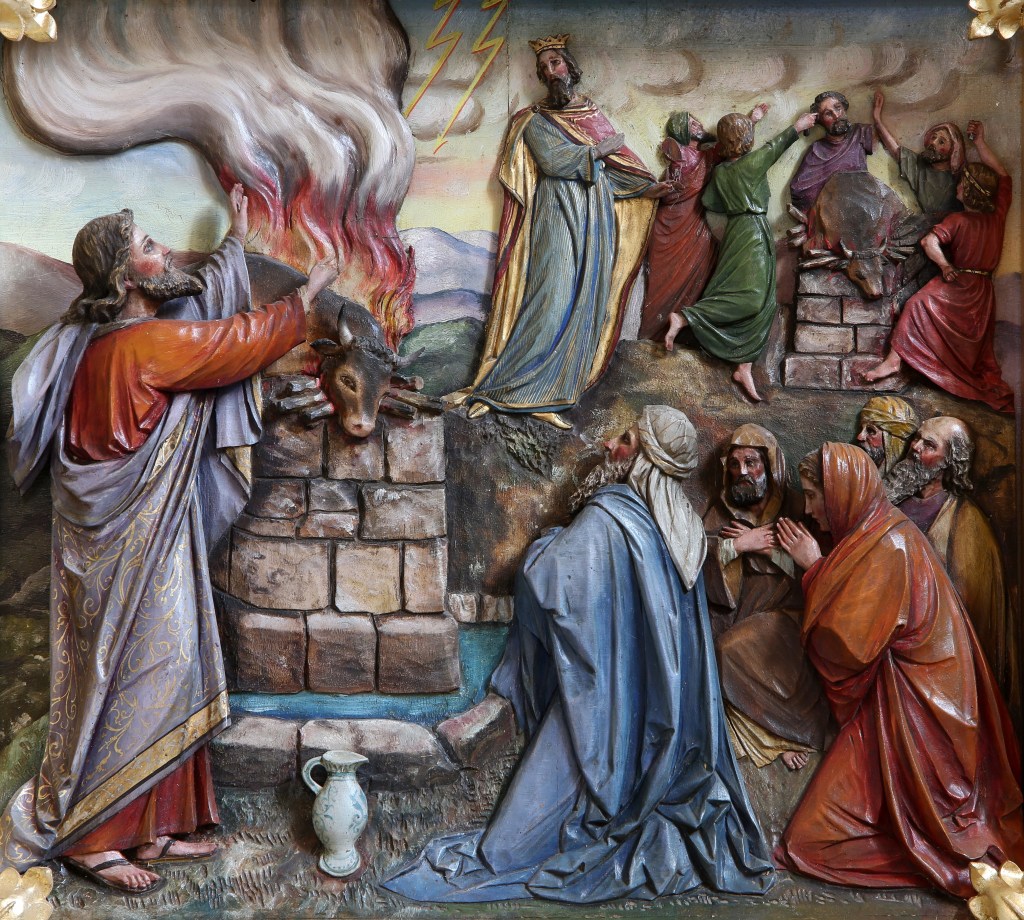
In Exodus 20, God gives very different instructions to his people regarding the way they are to honor him. They are to build an altar instead of an idol, thus eliminating the danger of mere humans choosing a physical image to represent the “invisible God.” This altar is also to have as little human contribution as possible in its making. It is to be made of God’s creation, undefiled by man’s efforts to shape it with tools. In addition, no person should expose their shame and sin (represented as their nakedness – think Adam and Eve) when approaching God to offer sacrifices.

Perhaps most importantly, the Israelites are not to worship the physical thing in front of them (as the pagan cultures worshiped their idols) but instead they are to offer sacrifices to the Lord, which are consumed by fire and rise to God where he dwells in the heavens. The unique nature of God’s instructions is evidenced by the fact that there is no documented parallel to the worship of an image-less deity in the ancient near East. Yet YHWH, named by himself, too majestic and terrible to be represented by anything made by man, unaccepting of anything but pure, whole-hearted worship, let his presence dwell partly on earth so that a group of people (who had nothing in particular going for them) could live in the presence of God’s name.

These detailed and careful instructions God gives to Israel regarding how to worship a God too holy to be sullied by any creation of man makes it all the more striking and surprising that, later in history, God himself descended all the way to earth and took on the visible and unimpressive image of a man. The Creator clothed himself in Creation because we had drifted so deeply into depravity that mere ceremonial purity was not sufficient to lift up our souls. God’s altar of unsullied earth was replaced by a manmade instrument of torture, but the offering upon it was transformed from a sheep, unblemished only externally, to the wholly pure Son of God.
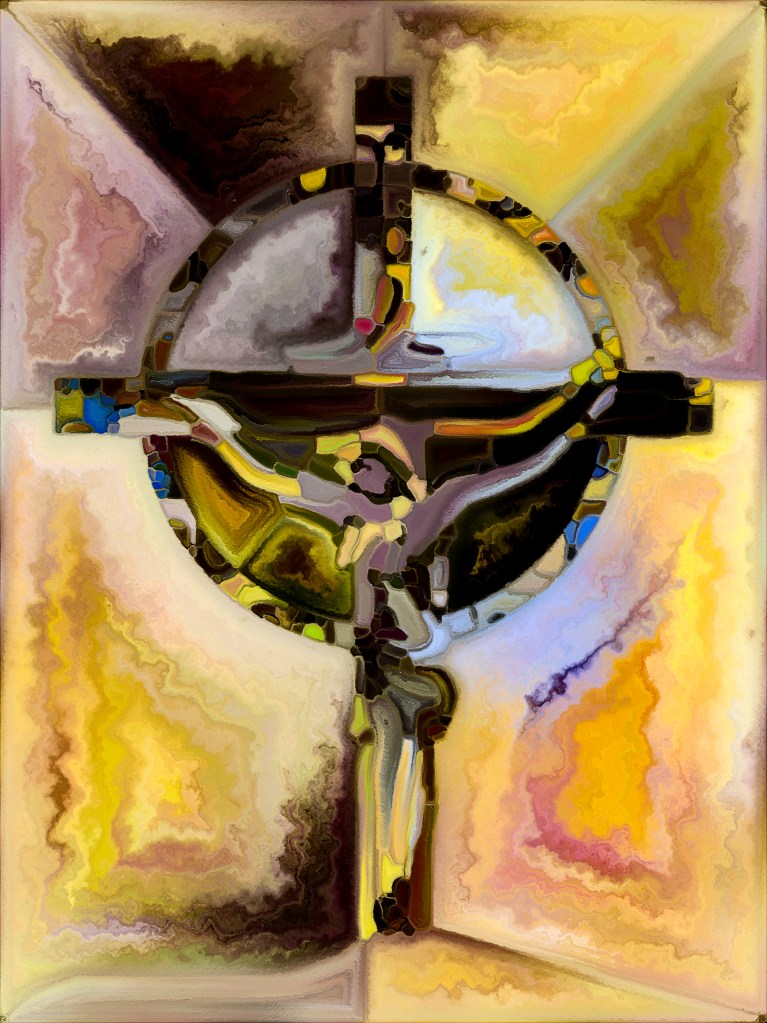
God’s instructions to the Israelites regarding how to properly worship him matter, but he knew all along that they would never be enough. The Sinai law was not meant to last forever – God gave it to Israel, his Son standing beside him, while simultaneously seeing what its fulfillment would eventually require. He gave it nonetheless, a gift wrapped in mercy and grace, a stopgap allowing his people to thrive and draw near to the unapproachable glory of YHWH. He gave it to bridge the gap between rescue from Egypt and rescue from sin. He gave it to Israel alone because through them, he would finally fulfill his promise to their first Patriarch – Abraham, friend of God.

In Jesus, in the spread of the gospel following his death, the continuity of God’s plan to redeem the world became clear. God’s promise of offspring and land to Abraham was only partially realized when the Ark of the Covenant crossed the Jordan into Canaan. It was not until Jesus’ death that all nations were blessed and that all of God’s children gained a home – not with the earth and idols of this world, but in a land of sorrowless praise.
The Sinai law, with all its talk of goats and oxen, is part of every believer’s delivery into the true promised land. Without its detailed descriptions of appropriate sacrifice, the power of Christ’s death would have no law to fulfill. But through the law, the promise has been attained. Past Canaan, we see heaven. There we will know not just God’s given name on earth, but the true glory of his full character, brought to us by the matchless name of Jesus Christ.

 Before the Fire