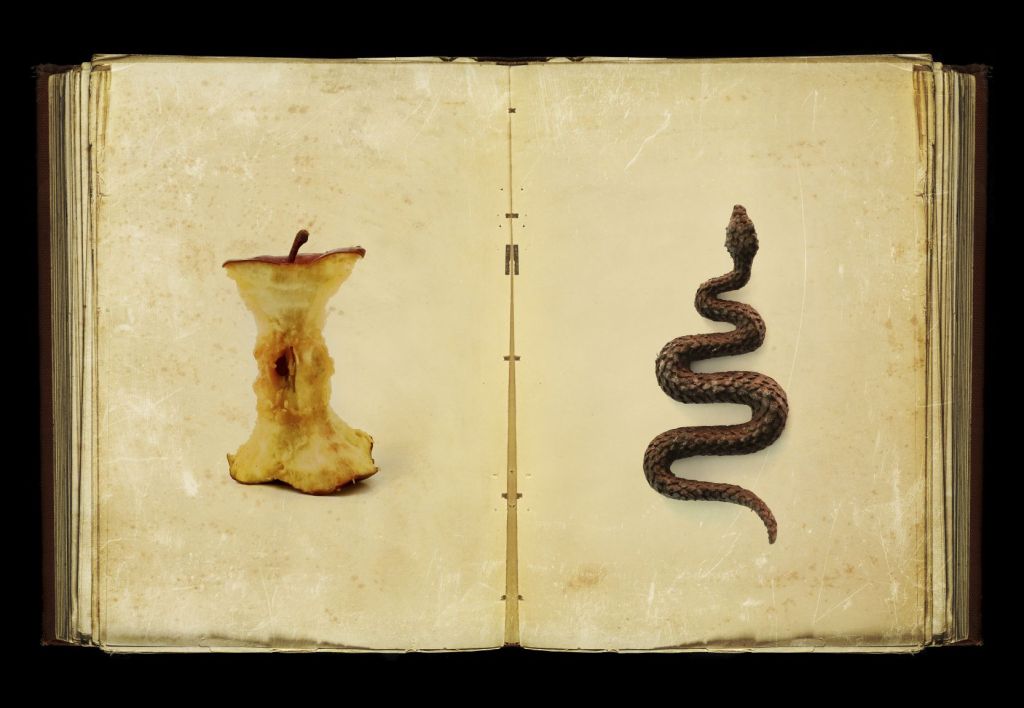
For God so loved the world, that he gave his only Son, that whoever believes in him should not perish but have eternal life.
Have you ever asked of arguably the most well-known Bible verse, Why? Why God’s Son? Why was it necessary for God himself to step down to earth as a man? Surely, he could have thought of a better way. Why not have Jesus walk the earth as the angels did – human only in appearance? If God loves us so much, why not just wash us clean with a wave of his hand? Surely the mighty hand of God could do it, right? The answer is so richly layered that one could (and should) spend a lifetime contemplating it.
And the Word became flesh and dwelt among us….
The price of sin from the very beginning was death. God’s only commandment to Adam and Eve was to not eat of the tree of the knowledge of good and evil or else they would surely die. They ate. We all know the rest of the story. We see it daily in the brokenness of our world. I think this is where many turn away from the Christian story. To them it seems senseless to worship a God whose justice brings death. How can a loving God allow such darkness? The thing is, God is light and the darkness brought by one’s own sin cannot abide his radiance. If he were to wave away the darkness, we would vanish along with it. Still, though, if God were so loving, why not give us a “pass”?
The simple answer is he’s done just that.

There are two things I always keep in mind when I do my Bible study. One, the 66 books of the Bible are bound together for a reason. To a believer in Jesus, no one book of the Bible should stand alone. Narrative, poetry, prophecy, and instruction all tell one story, that of Creation’s birth, fall, and redemption. The second thing that helps illuminate the Word for me is the acknowledgment that God is in heaven and I am on earth. Every human being is bound by time. It’s amazing what an enormous influence this has on our thought processes. What would it be like to stand outside time? Would it be like standing outside of a bubble, watching history through glass? Or perhaps the “fabric of time” is indeed a vast tapestry woven by God. Whichever way we like to imagine it, I’m sure we’ve gotten it wrong.

Our perspective, as humans, is skewed. Why couldn’t God have given Adam and Eve a pass? we ask. Like I said, he did. It just looks a little different than what we might expect. We see the sins of Adam and Eve as ancient history – long over by the time Jesus stepped in. The gospel of John tells a different story. Whereas the other gospels start at certain points in history, the prologue of John takes a step outside the bubble. Jesus was there in the beginning and since “all things were made through him, and without him was not any thing made that was made,” we know he was there outside the beginning. Human thought tends to say Jesus was there before time began because we think linearly with respect to history. But Jesus was, is, and ever will be. God has always known the price of our ransom.
In him was life, and the life was the light of men.
The Lord God’s character cannot be teased apart and treated piecemeal. He is all things good and in him is life. Sin is a rejection of God and thus, by definition, the forsaking of life. God loves us and longs for us, but his life and our death cannot coexist. The fact that death is the penalty for sin is not some arbitrary assignment. You may be able to make up a god who can operate as both light and shadow, but such a being would be a stormy sea – faithless and undependable. The true God is a rock. He has graced mankind with the revelation of his character as told by his chosen people in the pages of the Hebrew Bible. God’s first commandment to mankind was given alongside the penalty for disobedience. Man turned away from God and death followed, not so much as a punishment, but as a direct consequence.
A death had to occur. Blood had to be shed. The righteousness and justice of the Father God could demand nothing less. Only a sacrifice without blemish would suffice and only God could live a sinless earth-bound life. God himself, in the form of the Son, was the only possible sacrifice that could atone for sin. For that sacrifice to be possible, God had to descend from heaven and take on a human body, for only flesh can redeem flesh.
We’re wading into some deep waters theologically, and I don’t pretend to understand why one sinless man has the power to reverse death. That much I take on faith. I do know that God told his people in a million different ways that he would redeem them for the sins they knew led to death. Reading the Old Testament with the hindsight of knowing the resurrected Lord is an extraordinary privilege. We can start at a point in human history, around 30 A.D., and see the way Jesus walked, talked, lived, and died. Then, with but the flipping of some pages, we can look back at Israel’s meticulously detailed sacrificial law and see in it the mercy and grace of God leading his people toward the future – a future in which they would meet God face-to-human-face.

For the law was given through Moses; grace and truth came through Jesus Christ.
It is key that Jesus is fully man in addition to being fully God because it is only through his humanity – his flesh and his blood – that he can fulfill the Mosaic, sacrificial law. As the book of Hebrews says, “Indeed, under the law almost everything is purified with blood, and without the shedding of blood there is no forgiveness of sins” (Hebrews 9:22). Jesus fulfilled the old law when he died for us and thus opened the path that leads beyond sin to everlasting life. The law was never meant to wash our sins away. It was a temporary means for God to remain close to his people despite their sin, and also a beautiful foreshadowing of the future sacrifice of the true King.
The blood shall be a sign for you, on the houses where you are. And when I see the blood, I will pass over you, and no plague will befall you to destroy you, when I strike the land of Egypt.
-Exodus 12:13
I have loved C.S. Lewis’ Narnia series since my mom read the books to me as a young child. The story of Aslan sacrificing himself on the stone table to pay the price of Edmund’s treachery influences my thoughts about Jesus’ own self-sacrifice even today. After Aslan rose from the dead, he explained how it was possible to the Pevensie girls.
“It means that though the Witch knew the Deep Magic, there is a magic deeper still which she did not know. Her knowledge goes back only to the dawn of time. But if she could have looked a little further back, into the stillness and the darkness before Time dawned, she would have read a different incantation. She would have known that when a willing victim who had committed no treachery was killed in a traitor’s stead, the Table would crack and Death itself would start working backwards.”
Here, in The Lion, the Witch, and the Wardrobe, we again come across the problem of our perspective, trapped within time as we are. What is so stirring to me is the fact that Aslan’s killer, though seemingly immortal, didn’t know the whole plan. It recalls to me a couple lines of a praise song I love called “Death Was Arrested,” by North Point Worship. It narrates Jesus’ death and resurrection and, at the pivotal moment of Jesus’ death, these lines come:
Our savior displayed on a criminal’s cross
Darkness rejoiced as though heaven had lost…
But then Jesus arose with our freedom in hand
That’s when death was arrested and my life began
Darkness rejoiced…. Like the White Witch in Narnia, it isn’t just people who don’t know the whole story. There are forces at work and at war in ways to which we are completely oblivious. Remember, then, that we are all characters in the greatest story ever written and that the author himself has invited us all to step out of the pages and into the true reality, where the “deeper magic” has opened the way. As man he saves and as God he reigns. Let us all embrace the eternal life he offers.
 Before the Fire