
The book of Hebrews defines faith as “the assurance of things hoped for, the conviction of things not seen.”1 After all, believing in something one can see doesn’t require much commitment. Too often, though, this definition gets twisted and distorted so that faith becomes only something we can’t see. What is essential for Christians to remember is that yes, faith is belief in a thing unseen, but not in a thing unknown. We may not be able to see God, but neither do we walk in the dark. As Isaiah prophesied,
The people who walked in darkness
have seen a great light;
those who dwelt in a land of deep darkness,
on them has light shone.2
The question becomes, if the Light has revealed himself to us, how are we to live? One only need turn to the back of the Bible to hear the book of 1 John crying out the answer: “And this commandment we have from him: whoever loves God must also love his brother.”3 John goes so far as telling us that to love our unseen God, we must love those we can see. Doing this is a concrete, visible manifestation of our faith. The same John also wrote one of the most convicting verses I know when he quoted Jesus saying, “’By this all people will know that you are my disciples, if you have love for one another.’”4 A Christian’s highest calling, aside from loving God, is to make our God visible, and thus knowable, through the way we love. After all, no one puts a lamp under a basket.

That all sounds pretty simple, right? We only have two commandments to follow and, according to 1 John, “they are not burdensome.”5 The first, loving God with heart, mind, soul, and strength, is the anchor of our faith. In a believer, this love runs deep and true, even though the cares and temptations of the world ruffle the surface. If you’re like me, it’s the second commandment that often seems insurmountable. Love others? Love my enemies? It’s hard enough to love all of my Christian brothers and sisters. Thankfully, John gives us the reason the Lord’s commandments are not burdensome. In one of the most quoted verses of the Bible, John tells us that “we love because [God] first loved us.”6 What a relief those words are to me. God took my helplessness into account before I even knew him!
So, what have I contributed to my present state? My time-bound mind cannot tease apart the threads of faith, deeds, and salvation in the great tapestry of Creation. I definitely ponder these things, but they never keep me up at night. The light of God has already given me the answers I need. He, through John, says, “This is the victory that has overcome the world—[our] faith.”7 The Greek verb translated here as “has overcome” is actually in the aorist tense (yes, my nerd hat is on), which translates literally as “overcame.” It is the tense used to indicate an action that has been completed. We have already won. Our faith has enabled us to join in Jesus’ triumph.

The book of 1 John is packed full of dichotomies: truth and lies, love and hate, light and dark. It seems fitting to me that John signs off with another stark juxtaposition: the triune God whom he has spent five chapters describing and the opposite and only other choice: an impotent, manmade idol. People may boast that faith is only for the weak and that it is those who bow down to nothing who are strong. Don’t be fooled; it is the human condition to place faith in and rely on something, always. Look at proud atheists and you will surely find the worship of knowledge, power, pleasure, and money.




This world that we see now is but a vapor. “For the things that are seen are transient, but the things that are unseen are eternal.”8 When we die or when Jesus returns, we will watch the sky vanish “like a scroll that is being rolled up”9 and we who have lived in the true faith will remain. God may not be visible to me today, but his truth shines far brighter than anything the world can make.
Jesus, Son of God, is the truth, the life, and the light of the world. Thanks to his life and death and the testimony I have of them on the pages of my Bible, I know what I believe. I know whom I believe. As Paul says in Ephesians 1:18, the eyes of my heart have been enlightened, that I may know what is the hope to which the Lord has called me. That hope is born of God’s love, and through that hope I am able to love.
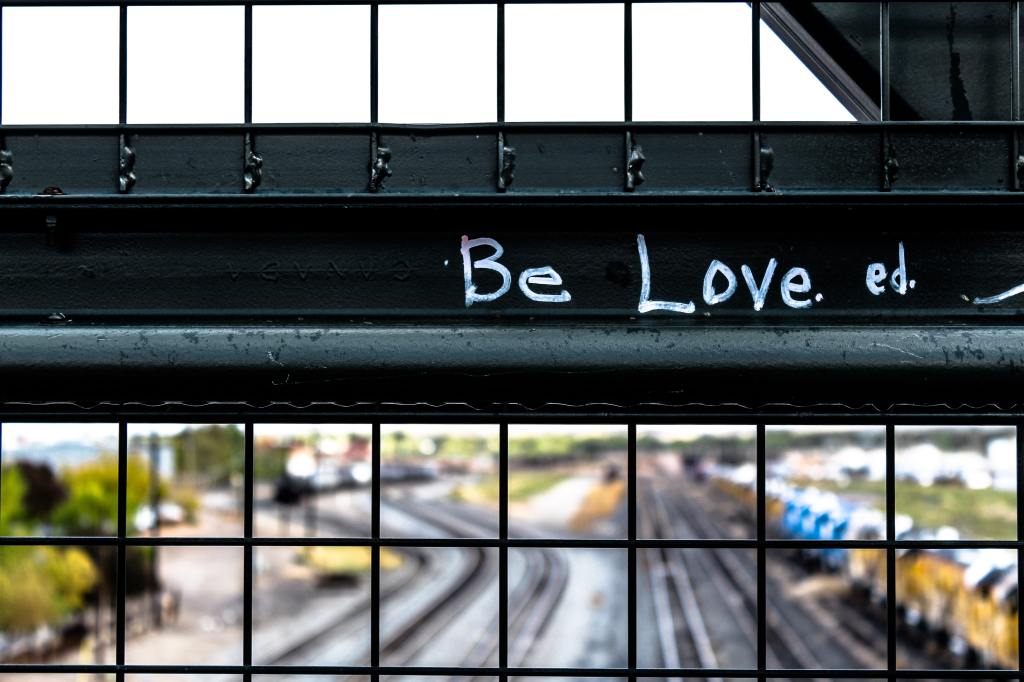
For us as believers, the choice between manmade gods and the Lord Almighty is the choice between what our eyes see and what our hearts know. I pray that I will choose each day, each hour, to walk by faith and not by sight. The love of God, both mine and his, demands nothing less.

“You are the light of the world. A city set on a hill cannot be hidden. Nor do people light a lamp and put it under a basket, but on a stand, and it gives light to all in the house. In the same way, let your light shine before others, so that they may see your good works and give glory to your Father who is in heaven.”
Matthew 5:14-16
Citations:
1. Hebrews 11:1
2. Isaiah 9:2
3. 1 John 4:21
4. John 13:35
5. 1 John 5:3
6. 1 John 4:19
7. 1 John 5:4
8. 2 Corinthians 4:18
9. Revelation 6:14
 Before the Fire
Excellent focus on what is important.
LikeLike